Mountain Modern architecture has emerged as Idaho's defining residential style—and for good reason. This sophisticated design approach honors the region's dramatic landscapes while delivering the clean lines and open spaces contemporary homeowners demand. It is architecture that belongs: rooted in place, responsive to climate, and authentically connected to the Rocky Mountain West.
At Abstract Residential Design + Build, Mountain Modern represents more than an aesthetic trend. It reflects our design philosophy: buildings should enhance their settings, employ materials honestly, and serve the lives unfolding within them. This comprehensive guide explores what makes Mountain Modern architecture distinctive, why it thrives in Idaho, and how to execute it successfully.
What Defines Mountain Modern Architecture?
Mountain Modern architecture synthesizes two seemingly contradictory design traditions: the rustic mountain lodge and contemporary modernism. The result is a style that feels both timeless and progressive—grounded in natural materials yet unmistakably current.
1. Honest Expression of Structure
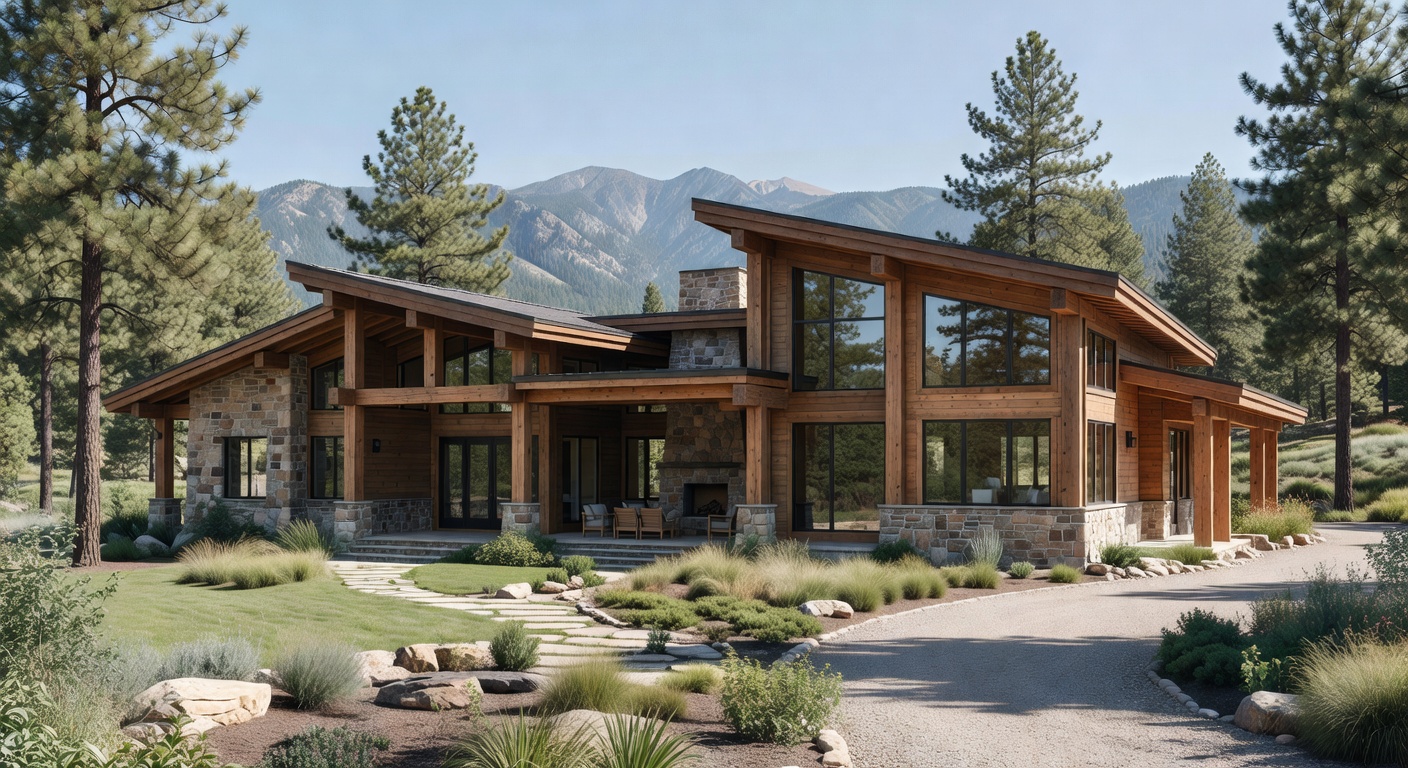
Mountain Modern homes celebrate structural elements rather than concealing them. Heavy timber beams, exposed trusses, and steel connections become architectural features. This honesty extends to material junctions: where wood meets stone, metal meets glass, the transitions are clean and deliberate rather than hidden behind trim and casing.
2. Integration with Landscape
These homes do not dominate their sites—they converse with them. Building forms respond to topography, view corridors align with mountain vistas or valley panoramas, and outdoor spaces extend living areas into the landscape. The boundary between interior and exterior softens through expansive glazing, covered terraces, and material continuity.
3. Emphasis on Natural Light
Large windows, clerestories, and thoughtfully positioned glazing flood interiors with daylight while framing specific views. Unlike traditional mountain homes that often feel cave-like, Mountain Modern spaces are luminous—a critical advantage during Idaho's relatively short winter days.
4. Clean, Geometric Forms
Exteriors feature simple volumes, horizontal lines, and restrained ornamentation. Complexity arises from material interplay, volumetric composition, and proportional relationships rather than applied decoration. The result is visual calm that allows landscape to command attention.
5. Material Authenticity
Materials appear as they are: wood grain remains visible, stone retains texture, metal develops patina. Synthetic substitutes and false finishes have no place. This commitment to authenticity extends beyond aesthetics—it represents environmental responsibility and long-term durability.
Signature Elements of Mountain Modern Design
While every Mountain Modern home is unique, certain design elements recur:
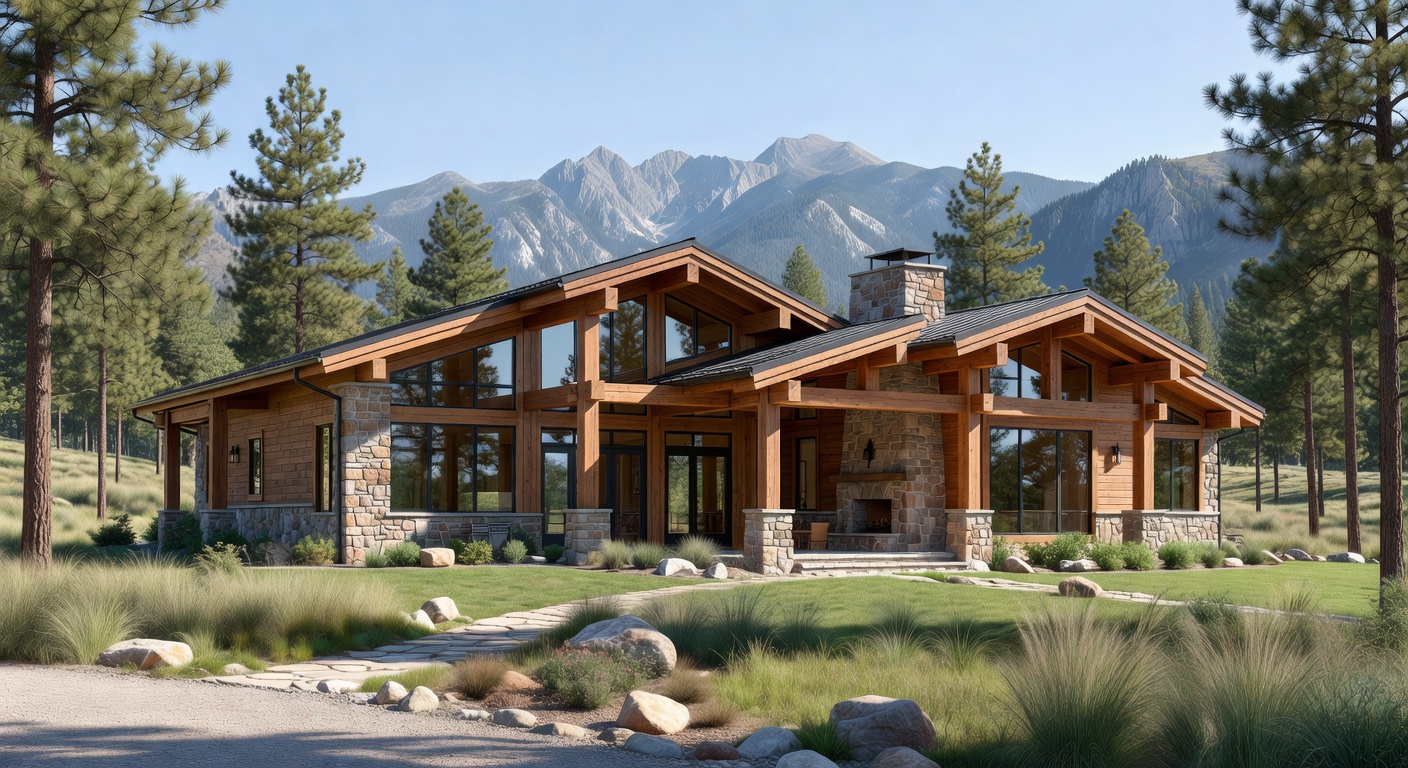
- Heavy timber framing: Exposed Douglas fir, Western red cedar, or reclaimed wood beams as primary structural and visual elements
- Natural stone: Locally sourced or regionally appropriate stone for accent walls, chimneys, and foundation expression
- Expansive glazing: Floor-to-ceiling windows, sliding glass walls, corner windows that dissolve boundaries
- Low-slope or shed roofs: Profiles that complement rather than compete with mountain silhouettes, often with generous overhangs for sun control
- Metal accents: Standing-seam metal roofing, steel beams and columns, blackened steel window frames, weathering steel cladding
- Horizontal emphasis: Long, low forms that hug terrain rather than tower above it
- Neutral, earth-toned palettes: Colors derived from surrounding landscapes—stone grays, wood browns, sage greens, sky blues
- Indoor-outdoor continuity: Covered terraces, outdoor living rooms, seamless floor-to-ceiling thresholds
Why Mountain Modern Thrives in Idaho
Architecture cannot be separated from place. Mountain Modern thrives in Idaho because it directly responds to our climate, topography, cultural identity, and lifestyle priorities.
Climate Responsiveness
Solar gain management: Idaho's high-desert climate delivers abundant sunshine year-round—approximately 210 sunny days annually in the Treasure Valley. Mountain Modern's generous overhangs and thoughtfully oriented glazing capture winter sun for passive heating while shading interiors during summer months when the sun angle is higher.
Thermal performance: Heavy timber construction provides thermal mass that moderates temperature swings. Combined with modern insulation techniques and high-performance windows, Mountain Modern homes achieve superior energy efficiency compared to traditional mountain lodges.
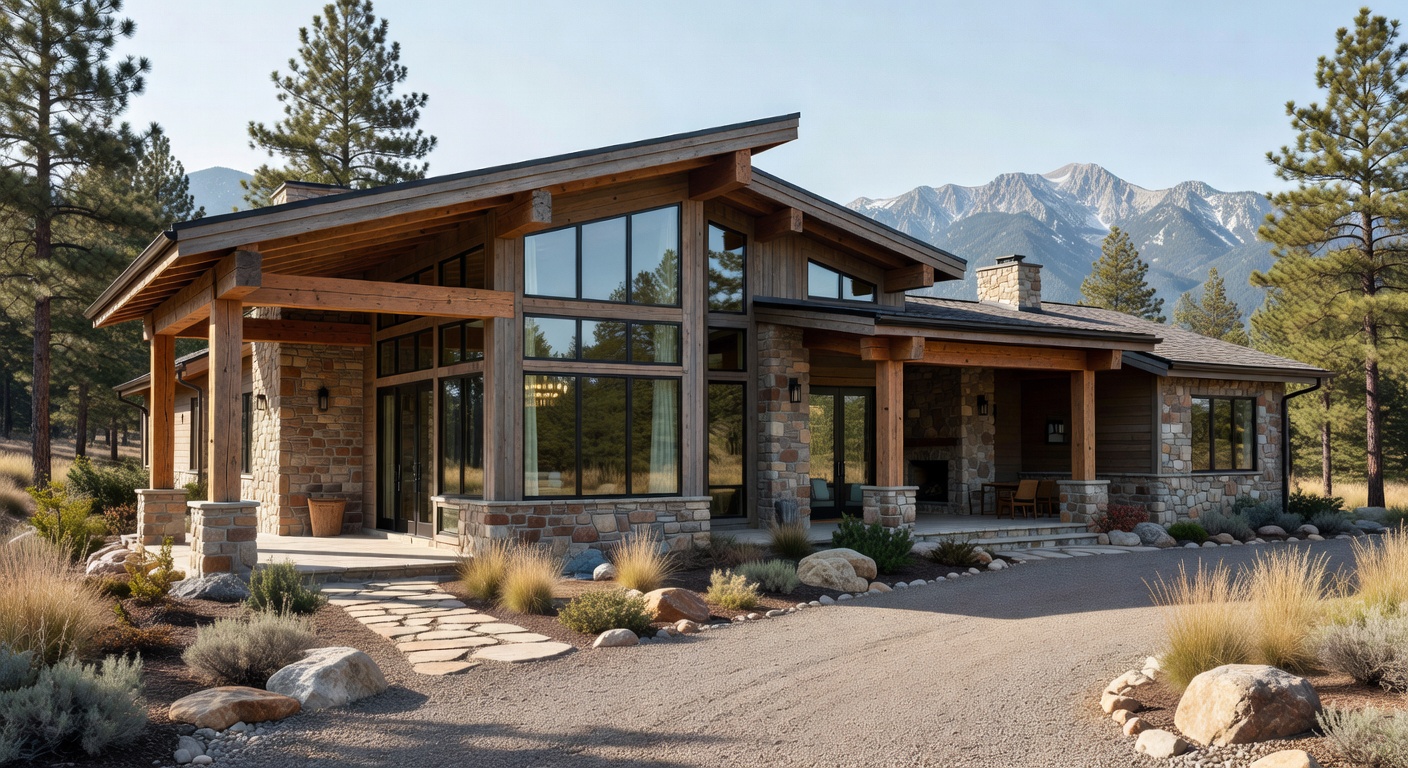
Weather durability: Material selections—metal roofing, fiber cement or board-and-batten siding, stone veneer—withstand Idaho's temperature extremes (summer highs above 100°F, winter lows below 0°F), low humidity, and occasional severe weather events.
Snow load capacity: For mountain community properties (McCall, Garden Valley, Donnelly), exposed timber framing and engineered roof systems easily accommodate Idaho's substantial snow loads while creating dramatic interior volumes.
Site and Topography
Idaho's varied terrain—from gently sloping Treasure Valley parcels to steep mountain sites—provides ideal conditions for Mountain Modern design:
- Sloped sites: Multi-level plans that step with topography rather than requiring extensive grading, preserving natural drainage and reducing site disturbance
- View optimization: Strategic window placement captures Boise foothills vistas, valley panoramas, or mountain ridgelines without overwhelming interiors with glass
- Privacy through siting: Thoughtful building orientation and landscaping provide seclusion even on smaller Treasure Valley lots
Lifestyle Alignment
Outdoor recreation culture: We Idahoans prioritize outdoor access—skiing, hiking, mountain biking, fishing. Mountain Modern's seamless indoor-outdoor transitions support this lifestyle through covered patios, mudrooms for gear storage, and visual connections to landscape.
Western identity with contemporary sensibility: The style honors our Western heritage through natural materials and mountain references while avoiding theme-park rusticity. It appeals to newcomers from coastal metros seeking authentic mountain living and longtime Idahoans wanting sophisticated, regionally appropriate architecture.
Sustainability values: Idaho homeowners increasingly prioritize environmental stewardship. Mountain Modern's emphasis on durable materials, energy efficiency, and minimal site disturbance aligns with these values.
Market Performance
Parade of Homes data consistently shows Mountain Modern and Contemporary homes achieving highest engagement scores (85–97 out of 100) among Idaho buyers. This market preference translates to strong resale value, faster sales, and appreciation potential—particularly in Boise foothills, Eagle, and mountain resort communities.
Key Design Components: Material Selection and Application
Successful Mountain Modern execution requires careful attention to several critical design elements. Each decision impacts both aesthetics and performance.
Heavy Timber
Timber framing defines Mountain Modern interiors and select exteriors. Species selection balances aesthetics, structural performance, and budget:
- Douglas fir: The Idaho standard—strong, beautiful grain, locally available, cost-effective ($18–$30 per linear foot for exposed beams)
- Western red cedar: Rich color, natural rot resistance, premium appearance ($25–$40 per linear foot)
- Reclaimed timber: Historical character, sustainability story, unique ($35–$60+ per linear foot, limited availability)
- Engineered timber (glulam): Consistent quality, larger spans, modern aesthetic ($20–$35 per linear foot)
Finish considerations: Clear sealers preserve natural wood appearance while protecting against UV and moisture. Low-VOC stains can deepen color while maintaining grain visibility. Avoid heavy, opaque finishes that obscure wood character.
Natural Stone
Stone anchors Mountain Modern homes to their sites and provides textural contrast to wood and metal:
- Idaho quartzite: Local stone with regional authenticity, durable, variable colors (grays, tans, rusts) ($15–$30 per SF installed)
- Ledgestone or stacked stone: Horizontal profiles that reinforce Mountain Modern's linear emphasis ($18–$35 per SF installed)
- Cut stone or ashlar: More formal, refined appearance for contemporary-leaning designs ($25–$50 per SF installed)
- River rock or fieldstone: Informal, organic, best used sparingly for specific accent applications
Typical applications: Chimney surrounds, accent walls (interior and exterior), entry features, foundation expression, outdoor fireplace structures.
Metal Elements
Metal provides durability, modern edge, and weather resistance:
- Standing-seam metal roofing: The Mountain Modern standard—long lifespan (50+ years), snow shedding, contemporary profile. Colors: charcoal, bronze, weathered zinc ($10–$16 per SF installed)
- Blackened or dark bronze steel window frames: Slender profiles, dramatic contrast against light interiors, industrial aesthetic (premium cost, $150–$300 per SF of window area)
- Exposed steel beams and columns: Structural and visual elements, particularly effective for large spans or cantilevered forms
- Weathering steel (Corten) siding accents: Develops rust patina over time, distinctive appearance, requires careful detailing ($18–$30 per SF installed)
- Metal cladding panels: Corrugated or flat panels for accent areas, cost-effective modern expression ($8–$15 per SF installed)
Glass and Glazing
Windows are not merely functional—they are primary architectural elements:
- Floor-to-ceiling glazing: Erases boundaries between interior and landscape, maximizes daylight and views
- Corner windows: Eliminate traditional corners, create dramatic spatial effects, require careful structural engineering
- Sliding glass walls: Open entire walls to terraces and patios, ultimate indoor-outdoor connection
- Clerestory windows: High windows that admit light deep into plans while maintaining privacy
- Performance glazing: Low-E coatings, argon fills, and insulated frames essential for Idaho's temperature extremes (U-factor 0.30 or lower recommended)
Budget impact: High-performance windows represent 8–12% of construction costs but deliver significant energy savings and comfort. Expect $150–$300 per square foot of window area for quality aluminum-clad wood or fiberglass windows with contemporary profiles.
Siding and Cladding
Exterior cladding balances aesthetics, durability, and maintenance:
- Board-and-batten wood siding: Vertical emphasis, traditional mountain reference with clean execution. Cedar or pine, stained or painted ($12–$18 per SF installed)
- Horizontal wood siding: Contemporary interpretation, can be fiber cement for lower maintenance ($8–$14 per SF installed)
- Fiber cement panels: Wood appearance without maintenance, available in various profiles and finishes ($10–$16 per SF installed)
- Stucco or EIFS: Smooth, monolithic surfaces for contemporary-leaning designs, cost-effective ($8–$12 per SF installed)
Roof Design Strategies
Roof design profoundly impacts Mountain Modern character:
- Low-slope gable roofs: Traditional form with contemporary proportions—lower pitch (3:12 to 5:12 vs. traditional 8:12 or steeper), wide overhangs, clean eave details. Most common and versatile option.
- Shed roofs: Single-slope roofs that create dramatic interior volumes, opportunities for clerestory glazing, and strong directional emphasis. Effective for capturing views or responding to slope.
- Flat or nearly-flat roofs: Ultimate contemporary expression, requires excellent waterproofing and drainage design. Best suited for arid climates; requires careful detailing for Idaho snow loads.
- Combination roofs: Multiple roof planes at varying heights create visual interest, define distinct volumes, and enable clerestory windows between levels.
Overhang strategies: Generous overhangs (24"–48") provide critical sun shading during summer while allowing low-angle winter sun penetration. They also protect siding, reduce water infiltration, and create covered outdoor spaces.
Window and Glazing Strategy
Glazing strategy separates exceptional Mountain Modern homes from merely competent ones:
- View hierarchy: Not all views are equal. Prioritize premium views (mountains, valleys, dramatic landscapes) with floor-to-ceiling glazing. Secondary views receive standard windows. Service areas get minimal, functional glazing.
- Daylighting strategy: Position windows to wash walls with natural light, balance light from multiple directions to reduce glare, and use clerestories to introduce light deep into plans without compromising privacy.
- Thermal considerations: Concentrate glazing on south-facing walls to capture passive solar heat. Limit north-facing windows (cold in winter, limited light quality). East and west glazing requires careful shading to prevent morning and evening glare.
- Privacy and exposure: Large windows demand thoughtful siting. On smaller Treasure Valley lots, position glazing toward private rear yards or side yards with strategic landscaping rather than exposing interiors to neighboring properties.
Outdoor Living Integration
Indoor-outdoor connections are non-negotiable in authentic Mountain Modern design:
- Covered terraces and patios: Extensions of interior living spaces with weather protection. Timber posts and beams continue interior structural language. Typical dimensions: 12'–20' deep, running 20'–40'+ along building facades.
- Outdoor living rooms: Fully furnished spaces with seating, dining areas, and fire features. Ceiling fans and radiant heaters extend seasonal use. Outdoor-rated electrical and lighting infrastructure.
- Outdoor kitchens: Range from simple grilling stations to complete cooking suites with refrigeration, sinks, and storage. Stainless steel appliances, stone counters, weather-resistant cabinetry. Investment: $15,000–$60,000+.
- Fire features: Wood-burning or gas fireplaces, linear fire pits, freestanding fire tables. Both functional (extending shoulder-season use) and atmospheric. Stone or metal surrounds complement interior materials.
- Material continuity: Flooring materials (stone, concrete, porcelain tile) flow from interior to exterior. Timber beams extend from inside to outside. This continuity visually expands space and reinforces architectural unity.
Regional Variations: Treasure Valley vs. Mountain Communities
While core principles remain constant, successful Mountain Modern design adapts to local conditions:
Treasure Valley Adaptations (Boise, Eagle, Meridian, Nampa)
Climate adjustments:
- Greater emphasis on summer sun shading (deeper overhangs, operable shading devices)
- Outdoor living spaces designed for hot, dry summer use—misters, shade structures, cross-ventilation
- Drought-tolerant landscaping and water-wise irrigation systems
- Lighter roof loads (less snow accumulation than mountain communities)
Site strategies:
- Smaller lot sizes (typical 0.25–1 acre vs. multi-acre mountain parcels) require strategic privacy landscaping
- View priorities shift from mountain panoramas to foothills vistas, valley views, or curated landscape features
- Integration with suburban context—fitting into established neighborhoods while maintaining contemporary character
Material modifications:
- Lighter color palettes reflecting high-desert environment (soft grays, taupes, sage greens) vs. darker mountain tones
- More refined, residential-scale material applications vs. bolder mountain expressions
Mountain Community Considerations (McCall, Donnelly, Garden Valley)
Climate considerations:
- Enhanced snow load capacity (ground snow loads 60–150 psf vs. Treasure Valley's 25–35 psf)
- Steeper roof pitches or robust snow-shedding strategies
- Cold-climate construction techniques (advanced air sealing, upgraded insulation, high-performance windows)
- Covered entries and generous mud rooms for gear and weather protection
Site opportunities:
- Larger parcels enable more expansive building footprints and dispersed site planning
- Dramatic topography invites multi-level designs that capture views while minimizing grading
- Privacy less constrained by neighboring properties
Aesthetic expression:
- Bolder, more robust timber elements appropriate to mountain scale
- Darker, richer material palettes (charcoal, deep browns, weathered metals)
- Integration with forest settings—careful tree preservation, natural landscape buffers
Case Study Insights: Idaho Parade of Homes
Recent Parade of Homes events showcase Mountain Modern's dominance in Idaho's custom home market. Projects achieving engagement scores of 85–97 consistently feature:
Common success factors:
- Exposed heavy timber framing in great rooms and primary living spaces
- Natural stone fireplaces as focal elements
- Expansive glazing oriented toward Boise foothills or valley views
- Standing-seam metal roofing in dark bronze or charcoal
- Board-and-batten or horizontal wood siding with stone accents
- Open floor plans with 10'–12' ceilings and select vaulted spaces
- Chef-caliber kitchens with large islands, premium appliances, and natural stone counters
- Primary suites with spa-like bathrooms featuring freestanding tubs, walk-through showers, natural materials
- Covered outdoor living spaces with fireplaces and built-in grilling areas
Regional inspiration: While Idaho Mountain Modern has its own character, it draws inspiration from established mountain resort architecture in Park City, Utah, and Sun Valley, Idaho. These markets pioneered the synthesis of rustic and contemporary that now defines the style. However, Treasure Valley and broader Idaho applications adapt these influences to more suburban scales, modest budgets, and less extreme climates.
Budget Considerations and Cost Management
Mountain Modern architecture can be executed across budget ranges, though certain signature elements carry premium costs:
Cost Premiums for Signature Elements
- Heavy timber framing: Exposed beams, posts, and trusses add $25,000–$80,000 to typical 2,500–3,500 SF homes depending on complexity and species. Engineered solutions (glulam, LVL) reduce costs while maintaining aesthetic.
- Stone veneer: Accent walls, fireplaces, and exterior features add $15,000–$50,000 depending on coverage area and stone selection. Cultured stone provides cost-effective alternative ($10–$18 per SF vs. $18–$35 for natural stone).
- High-performance windows: Large expanses of contemporary glazing with narrow frames and high energy performance cost $40,000–$100,000+ for typical homes—roughly 20–40% more than standard windows of equivalent area.
- Metal roofing: Standing-seam profiles add $8,000–$20,000 over asphalt shingles on typical roofs but deliver 50+ year lifespan vs. 20–30 years.
- Architectural complexity: Vaulted ceilings, varied ceiling planes, and complex roof geometries increase framing costs 15–25% over standard construction.
Budget Tiers
Entry Mountain Modern ($250–$300 per SF construction cost)
- Select timber accents rather than comprehensive framing (e.g., living room beams only)
- Stone fireplace surround as primary stone application
- Generous but standard windows rather than floor-to-ceiling walls of glass
- Fiber cement siding emulating wood appearance
- Metal roofing on primary volumes, composition shingles on secondary roofs
- Typical home: 2,200 SF at $275/SF = $605,000 construction cost
Mid-Range Mountain Modern ($300–$375 per SF construction cost)
- Comprehensive timber framing in primary living spaces
- Stone accent wall plus fireplace
- Contemporary window packages with select floor-to-ceiling glazing at key views
- Natural wood or premium fiber cement siding
- Complete metal roofing
- Covered outdoor living space with basic outdoor kitchen
- Typical home: 2,800 SF at $340/SF = $952,000 construction cost
Premium Mountain Modern ($375–$500+ per SF construction cost)
- Extensive timber framing throughout including vaulted ceilings and exposed trusses
- Substantial stone applications interior and exterior
- Expansive contemporary glazing, sliding glass walls, corner windows
- Natural wood siding with metal panel accents
- Premium metal roofing with custom details
- Comprehensive outdoor living with full kitchen, fireplace, and multiple zones
- Custom millwork and architectural details throughout
- Typical home: 3,500 SF at $425/SF = $1,487,500 construction cost
Note: Costs shown reflect construction only. Total project budgets including land, design, site development, and landscaping typically add 30–50%.
Value Engineering Strategies
Thoughtful budget management preserves Mountain Modern character while controlling costs:
- Prioritize visible elements: Invest in signature timber beams in great room; use standard framing in bedrooms and service spaces
- Strategic stone placement: Feature wall and fireplace create impact; full-wall stone coverage rarely necessary
- Glazing hierarchy: Floor-to-ceiling windows at primary views; standard windows elsewhere
- Material substitutions: Fiber cement board-and-batten emulates wood siding at 60% cost with superior durability
- Simplified forms: Reduce roof plane complexity and ceiling height variations in secondary spaces
- Phased outdoor living: Build covered structure initially; add outdoor kitchen and advanced features later
The Design-Build Process for Mountain Modern Homes
Mountain Modern's architectural complexity and material integration make the design-build approach particularly advantageous:
Phase 1: Discovery and Programming
We begin by understanding your lifestyle, aesthetic preferences, and practical needs:
- Site analysis: topography, views, solar orientation, access, utilities
- Lifestyle discussion: how you use spaces, entertaining patterns, work-from-home needs, outdoor living priorities
- Aesthetic direction: material preferences, contemporary vs. rustic balance, reference projects
- Budget framework: establishing realistic cost parameters for desired scope and quality
Deliverable: Program summary, preliminary site plan concepts, budget ranges
Phase 2: Schematic Design
Architectural concepts take form with construction expertise integrated from the start:
- Floor plan development: spatial relationships, room sizing, circulation, flexibility
- Exterior design: massing, roof forms, material composition, window patterns
- Structural strategy: timber framing approach, beam sizing, foundation type
- Preliminary cost estimating: validating that design aligns with budget
Deliverable: Schematic floor plans, elevations, 3D renderings, refined cost estimate
Phase 3: Design Development
Details are resolved and material selections finalized:
- Detailed floor plans with dimensions, built-ins, ceiling plans
- Building sections showing spatial relationships and structural details
- Material selections: timber species and finish, stone type and placement, window specifications, roofing, siding, interior finishes
- MEP system design: HVAC approach, electrical layout, plumbing fixture selections
- Outdoor living design: patio layouts, outdoor kitchen specifications, landscaping concepts
- Final cost estimating and budget reconciliation
Deliverable: Complete design development drawings, material specifications, guaranteed maximum price contract
Phase 4: Construction Documentation
Construction drawings and permit applications are prepared:
- Complete construction documents suitable for permit review and field construction
- Structural engineering calculations and drawings
- MEP engineering plans
- Building permit application and review management
Phase 5: Construction
Your home is built with the same team that designed it:
- Unified accountability: designers and builders collaborate continuously rather than working sequentially
- Field adjustments: when site conditions or opportunities arise, we adapt design and construction in real-time
- Quality control: architectural intent maintained throughout construction because the team understands the design vision
- Regular communication: site meetings, progress photos, proactive updates on schedule and budget
Phase 6: Completion and Handover
- Final inspections and certificate of occupancy
- Client walk-through and punch-list completion
- Systems training and documentation delivery
- Warranty coverage and ongoing support
Frequently Asked Questions
What's the difference between Mountain Modern and Rustic Contemporary?
The terms are often used interchangeably, but subtle distinctions exist. Mountain Modern emphasizes cleaner lines, more refined detailing, and stronger contemporary influence. Rustic Contemporary leans slightly more traditional, with greater emphasis on rustic textures and lodge references. In practice, most Idaho homes blend both sensibilities and fall along a spectrum rather than fitting rigid categories.
Can Mountain Modern work on flat sites without mountain views?
Absolutely. While mountain views enhance any home, Mountain Modern's core principles—honest materials, clean forms, indoor-outdoor living—translate beautifully to flat sites. Design strategies shift from capturing distant mountain vistas to creating intimate landscape connections, framing sky views, and crafting compelling outdoor spaces. Some of our most successful Treasure Valley projects occupy modest suburban lots.
Is Mountain Modern more expensive than other architectural styles?
Mountain Modern typically costs 20–30% more than builder-grade traditional homes due to timber framing, stone features, and high-performance glazing. However, it costs roughly the same as other high-quality custom architectural styles (Craftsman, Contemporary, Modern Farmhouse) when built to comparable quality standards. The style's material authenticity and durable finishes often deliver superior long-term value.
How much maintenance does a Mountain Modern home require?
Properly detailed Mountain Modern homes require minimal maintenance. Metal roofing lasts 50+ years with virtually no maintenance. Natural wood siding requires periodic re-staining (every 5–10 years depending on finish and exposure). Stone veneer is essentially maintenance-free. High-quality windows need only occasional cleaning and seal inspection. The style's emphasis on durable, authentic materials reduces long-term maintenance compared to synthetic alternatives.
Can Mountain Modern be adapted to smaller homes or ADUs?
Yes. Mountain Modern principles scale effectively from compact ADUs to expansive estates. Smaller applications might feature a single dramatic timber beam rather than comprehensive framing, a stone accent rather than full walls, and strategic glazing rather than floor-to-ceiling glass throughout. The style's emphasis on clean forms and material honesty actually suits smaller footprints well, avoiding the visual clutter of overly decorated small spaces.
How energy-efficient are Mountain Modern homes?
When properly designed and constructed, Mountain Modern homes achieve excellent energy performance. Passive solar strategies (south-facing glazing with overhangs, thermal mass), high-performance windows and insulation, and efficient mechanical systems combine to deliver energy costs 30–50% below code-minimum construction. The style's emphasis on durable materials and quality construction also ensures performance longevity.
Can I add Mountain Modern elements to an existing traditional home?
Mountain Modern elements integrate well into additions and significant remodels. Adding exposed timber beams, replacing windows with contemporary profiles, introducing stone features, or creating covered outdoor living spaces can transform traditional homes. The key is commitment to the style's material authenticity and avoiding superficial application of trendy elements without underlying design coherence.
What window brands do you recommend for Mountain Modern projects?
We frequently specify Marvin, Pella Architect Series, and Loewen for their combination of contemporary profiles, energy performance, and durability. For ultimate contemporary aesthetics (minimal frames, narrow sightlines), we use Fleetwood, LaCantina, or NanaWall sliding glass systems. Regional suppliers also offer quality options at more accessible price points for budget-conscious projects.
Next Steps: Begin Your Mountain Modern Journey
Mountain Modern architecture represents more than an aesthetic trend—it reflects a design philosophy aligned with Idaho's landscape, climate, and lifestyle. At Abstract Residential Design + Build, we have refined this approach through dozens of Treasure Valley and mountain community projects, developing deep expertise in material selection, structural systems, and construction techniques that bring these designs to life.
Whether you envision a compact mountain retreat or an expansive Treasure Valley estate, we invite you to explore Mountain Modern possibilities: Schedule a design consultation where we'll discuss your site, preferences, and budget, then develop preliminary concepts that illustrate how Mountain Modern principles can shape your custom home.
What to expect:
- Review of your property or site selection criteria
- Discussion of Mountain Modern design variations and material options
- Preliminary floor plan concepts and exterior massing studies
- Budget guidance based on your specific project scope
- Portfolio review of completed Mountain Modern projects
Contact Abstract RD+B:
- Phone: (208) 906-1650
- Email: create@abstractrd.com
- Website: abstractrd.com
- Office: Nampa, Idaho | Serving the Treasure Valley and Mountain Communities
Architecture that belongs. Built for Idaho.